This is a common question in the marketplace and an understandable one.
All our Hydrocarbon (HC) coolers currently attract a premium price point when compared to units using R134a gas leading customers to ask why.
The reason is safety:
As HC refrigerants are flammable, additional safety measures need to be applied to components to ensure that they are not able to cause a spark/excessive heat that could cause an ignition source. Critical examples of this are the fan motors used in units. Where older design R134a units, where the refrigerant gas is non-flammable, could simply use shaded pole fans. The spark risk and rotor jam heat however from these poses a risk and as such needs to be replaced with EC or iQ fan motors in HC units. These fans are sparkless and pose no ingnition source risk. Another consideration is to relays or switches such as those used in older style mechanical thermostats and simple electrical light switches which can cause a tiny spark each time they are turned on or off. It is for this reason that solid-state electronics are spproved for use in HC units. All of these technology and component upgrades currently carry a cost premium, sometimes 300-400% more than the older, spark risk technology.
The Good News
While hydrocarbon units may carry a higher upfront cost to purchase, customers will recover this value over time through improved energy efficiency and reduced operating costs, as the component upgrades often carry an efficiency saving. For example EC or iQ fans are up to 70% more efficient that the older shaded pole technology fans.
In a nutshell, hydrocarbon units are more efficient and use less electricity month on month.
Also they are doing the environment a favour by using a more natural, climate friendly hydrocarbon gas compared to the older HFC gases, which had significantly higher Global Warming Potential (GWP).
Staycold’s Case Study
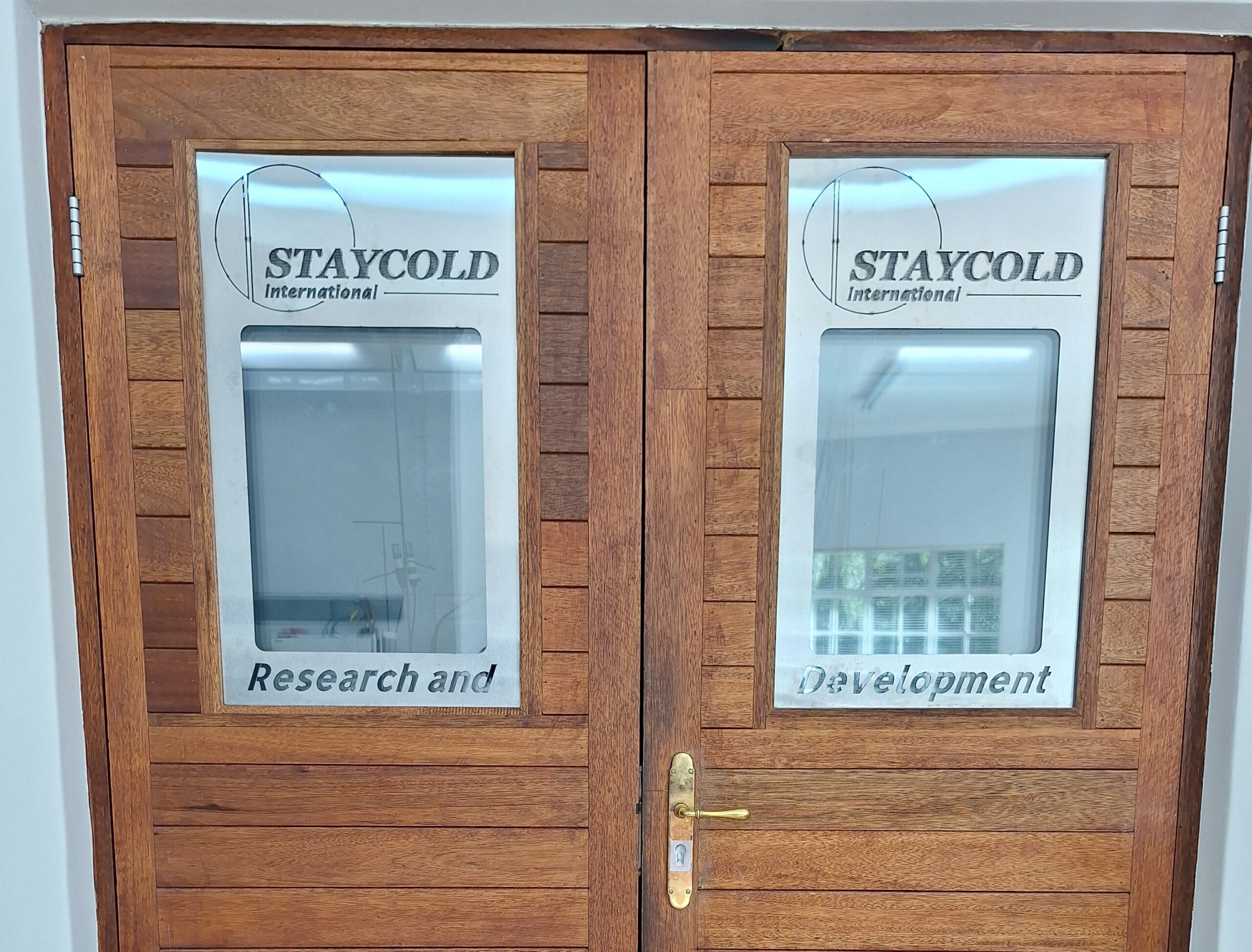
Staycold conducted tests in our climate chamber at our factory in Parys, South Africa on our most popular model, the SD1140.
We compared the standard SD1140 to the Hydrocarbon version, the SD1140–HC, and here are the results:
- The SD1140 consumes approximately 7.5 kWh per 24 hours, while the hydrocarbon equivalent can reduce energy consumption by up to 30%.
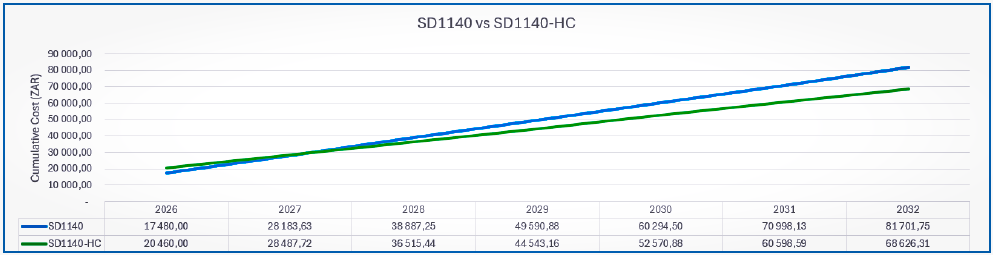
- The graph below illustrates the cumulative cost of purchasing and operating a Staycold SD1140 cooler compared to a Staycold SD1140-HC hydrocarbon cooler, based on approximately 25% lower energy consumption.
- While the SD1140-HC unit has a higher upfront cost compared to the SD1140, it consumes significantly less energy. Based on a normal kWh cost for electricity (excluding inflation), the breakeven point is approximately 12-18 months. So over a seven-year period, the energy savings are sufficient to almost cover the cost of a new unit.
We are now able to offer all of our coolers and freezers with hydrocarbon gas, whilst maintaining their performance, reliability and durability characteristics that you have come to expect from a Staycold product.
This has been achieved with all the necessary local and global quality and safety standards being met during production, for distribution to our customers in South Africa, Africa and beyond.
The transition began last year with our cooler range before extending to sub-zero units and, most recently, to the freezer range. The freezer cabinets required additional research and development due to the lower operating temperatures required, with units designed to consistently maintain internal temperatures below –20°C.
Safety Certifications
For the safety approval, we have not compromised on our local and international standards:
- IEC certified. We conform to all safety standards administered by the International Electrotechnical Commission. This global organisation works through accredited third-party labs that test and certify that all Staycold’s units are built to IEC standards, in particular IEC 60335-2-89 safety standards.
- ISO 9001:2015 accredited. This is an internationally recognised standard to ensure our business operates to an industry leading Quality Management System (QMS). Staycold receives this certification year on year after strict annual audits with an independent, accredited 3rd party certification body, instilling a culture for continuous product quality and improvement.
- Safehouse membership. A South African NPO committed to promoting safe and non-hazardous products. We received this organisation’s safety mark, reinforcing our compliance to local and global electrical safety standards.


Benefits to Procurement
All our customers and users of our products can be assured of safe, high-performing refrigeration equipment when procuring from Staycold.
The units consistently maintain the correct temperatures for beverages, ice cream and frozen foods, helping retailers preserve product quality and maximise sales.
Next Steps
To learn more about Staycold’s hydrocarbon refrigeration technology or arrange a factory tour, contact our team. We’ll help you understand the operational, energy and total cost of ownership considerations for your business be it for a few units or a full fleet across the region.

Authors Bio
Sebastian Hills, Sales Director of Staycold International, is an experienced refrigeration and HORECA professional with a science-driven approach. His expertise in commercial beverage cooling solutions has helped Staycold meet the needs of clients across South Africa, Africa, and globally.